


In just one year. That's all it took to go from the European top to complete disappearance. Jastrzębski Węgiel
is a club that, until recently, was among the most stable and successful in Europe, but today no longer exists in professional volleyball.
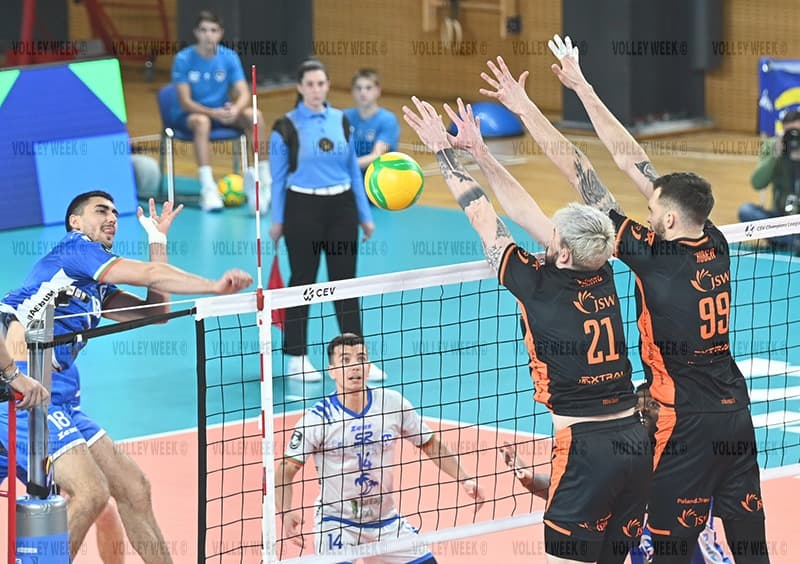
And the most paradoxical thing in the whole story is that the Bulgarian public had the chance to see them up close very recently
in the matches against Levski from the Champions League group stage. Back then, it was a clash with a European giant. Today
just a memory.
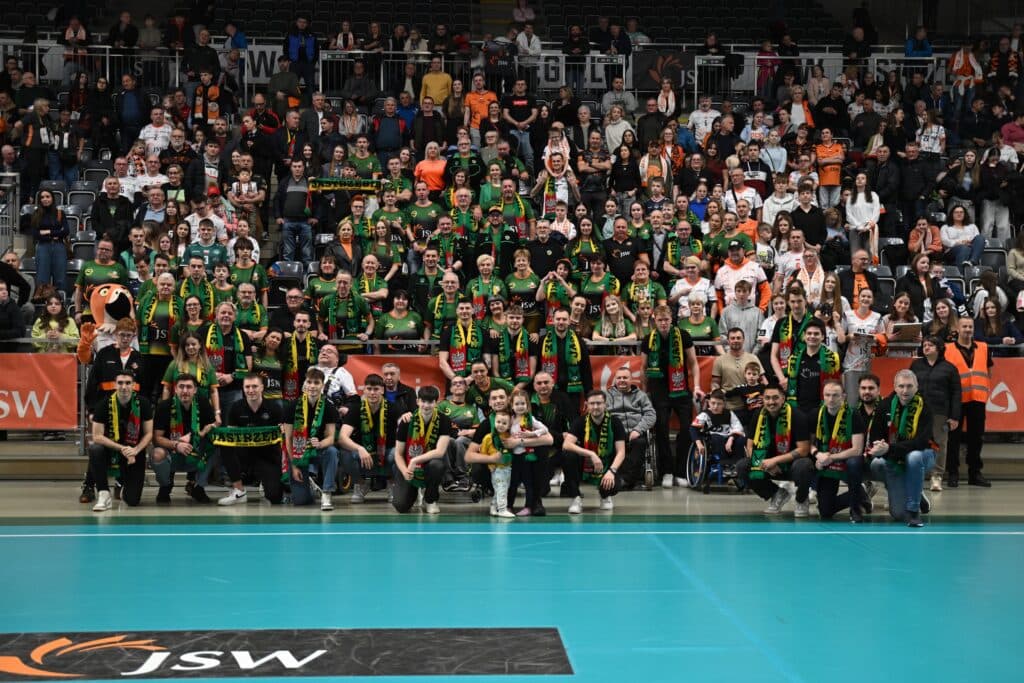
The Last Gathering
On April 9, the team and fans gathered for the last time. Not for a match, not for a trophy, but for a farewell. A photo that
says more than any words – a full hall, smiles, and the weight of the realization that this is the end.
The end of a club that for more than two decades was an integral part of the elite.
The Building of a Power
The history of Jastrzębski Węgiel begins much earlier – in the 1970s, but the true rise came after 1989, when the club
entered the elite of Polish volleyball.
From that moment on, it didn't just stay there – it became a constant factor.
The first major breakthrough came in 2004 with the Polish championship title, and after that, successes became part of the club's
identity. Medals, finals, participation in Europe – all of this was now normal.
The key moment was the partnership with Jastrzębska Spółka Węglowa. Financial stability allowed for the building of strong
teams, attracting big names, and appearing on the European stage as an equal to the best.
| National Successes | |
|---|---|
| Polish Champion | 2004, 2021, 2023, 2024 |
| Polish Supercup | 2021, 2022 |
| Polish Cup | 2010, 2025 |
| Polish Vice-champion | 2006, 2007, 2010, 2022 |
| Bronze Medal – Poland | 1991, 2001, 2003, 2009, 2013, 2014, 2017, 2019 |
| Polish Cup Finalist | 2008, 2012, 2014, 2019, 2021, 2022, 2023, 2024 |
It is clear that the club has had a consistent presence at the top in Poland for decades. Particularly impressive is the second
"golden era" after 2021, when Jastrzębski Węgiel won three titles in four years and once again established itself as a dominant
factor.
| International Successes | |
|---|---|
| Silver Medal – Champions League | 2023 (Turin), 2024 (Antalya) |
| Bronze medal – Champions League | 2014 (Ankara), 2025 (Łódź) |
| Silver medal – Challenge Cup | 2009 (Izmir) |
| 4th place – Champions League | 2011 (Bolzano) |
| Silver medal – Club World Championship | 2011 (Doha) |
The club's international profile reveals something key – Jastrzębski Węgiel is not a flash in the pan, but a long-term European factor. The two consecutive Champions League finals (2023, 2024) highlight that the collapse comes precisely at a moment of sporting peak.
The team that reached the top
The last few years were perhaps the strongest in the club's history.
Jastrzębski Węgiel played two consecutive Champions League finals, won the Polish title, took the national Cup in 2025, and was once again among the leading forces on the continent.
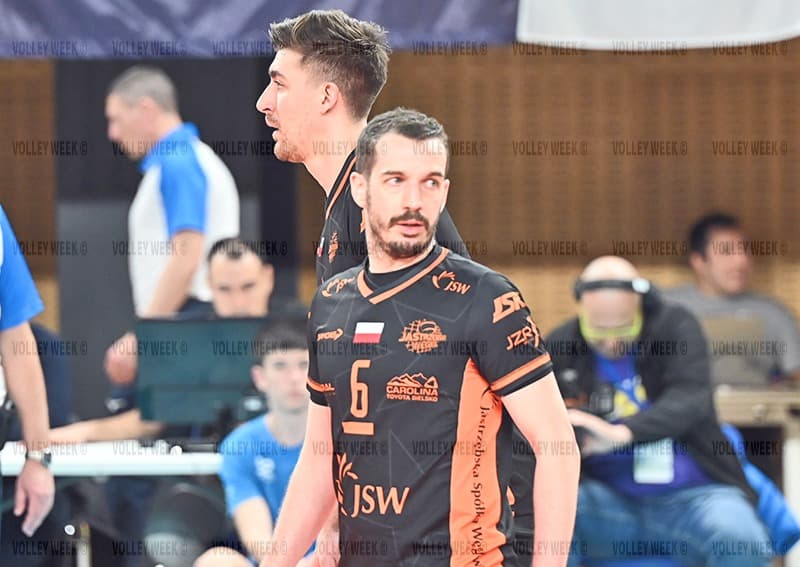
The squad featured names like Toniutti, Kaczmarek, Huber, Fornal – world-class players, Olympic champions and finalists. This was a team that didn't just participate; it dictated the standard.
The beginning of the end
And just when it seemed the model was sustainable, everything collapsed.
The withdrawal of the main sponsor JSW proved fatal. Without this financial backing, the club lost the ability to operate at the highest level. Problems began that initially seemed manageable but very quickly spun out of control.
Statements by President Adam Gorol in recent months clearly outline the process – from attempts at stabilization, through risk minimization, to a reality where there is no longer a way out.
In less than a year, the club went from winning the Polish Cup to withdrawing from PlusLiga.
The collapse
On the court, the season ends with elimination in the playoffs after a loss to PGE Projekt Warszawa. Off the court
– the complete collapse begins.
The stars are leaving, part of the staff is looking for new opportunities, and the license to participate in the elite remains free. The only structure that remains is the academy
– a potential foundation for some future revival.
Life goes on… but without them.
The interesting thing is that volleyball will not disappear from Jastrzębie-Zdrój. Ukrainian Barkom Każany Lwów will move its home games there.
This, however, is not a continuation of Jastrzębski Węgiel. There is no merger, no club-level continuity. Only part of the coaching staff will move to the new project. The players
– no.
As Barkom's Vice President Dariusz Biernat clearly stated
– all information about a merger is "half-truths or lies".
The Lesson
The story of Jastrzębski Węgiel is indicative of something much bigger than just a club.
It shows how fragile a model dependent on a single main sponsor can be. Years of stability, success, and growth
– and at one point, everything collapses.
The line between the top and disappearance turns out to be extremely thin.
The Bulgarian Perspective
For Bulgarian fans, this end also has a specific dimension. They saw this team live. Against Levski. Against a Bulgarian club. Against a team that was then part of the European elite.
Just a year later, this very club no longer exists. The contrast is sharp. And somewhat alarming.
The Finale That Remains Open
Jastrzębski Węgiel was not just a strong team. It was an institution. A club with history, traditions, generations of players and fans. Today, it leaves behind an empty space
– in PlusLiga, in European tournaments, and in the very narrative of modern volleyball. And a question that has no easy answer: How many more similar stories await their end?
photos:jastrzebskiwegiel.pland Nikolay Varadinov


