



Nayden Naydenov: "Without a youth academy, a big club is an empty structure"
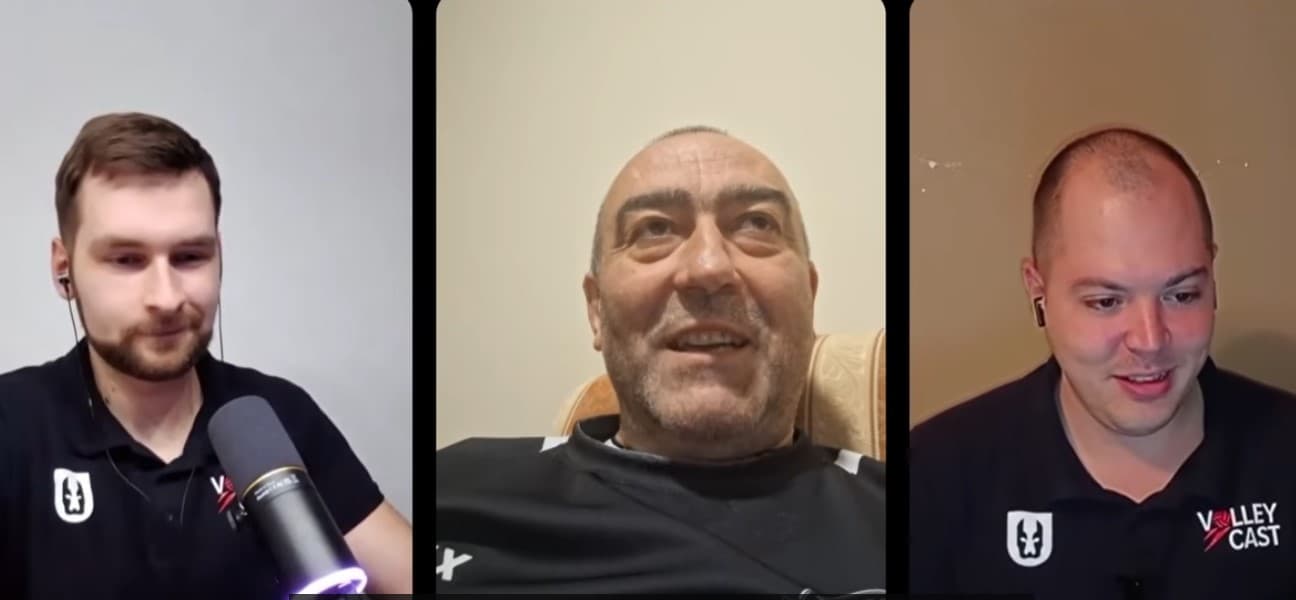
Nayden Naydenov – the last Bulgarian coach to lead the national team at the Olympic Games, and current coach of Lokomotiv Avia – speaks frankly on "Volleycast" about the decisions that make the difference between success and collapse, about the price of an "inconvenient" character, about the role of Matey Kaziyski, and about the most painful oversight in our club mentality: underestimating youth academies.
Bulgarian Cup: The favorite who set their own trap
Naydenov gives a straight diagnosis: his team entered the tournament with the feeling that they "had" to win. Paradoxically, it was precisely the excessive desire and self-suggestion of being the favorite that triggered nervousness, haste, and errors at crucial moments.
According to him, the match was broken in the first set when Lokomotiv had a lead but allowed a series of tension and provocations that threw the players off rhythm. The opponent was looking for exactly that – to "introduce" nerves, to disrupt the balance, because purely in terms of play, Lokomotiv was more stable. Naydenov is adamant: if the first set had been won, the match could have ended "like 3-0".
After the lost start comes the classic psychological chain: the favorite's confidence drops, and the other team "grows wings". Despite attempts to get back into the match and new chances (including situations where the team again had a lead), haste and the weight of expectation prevailed.
Matey Kaziyski: The missing factor and the correctly utilized presence
In the conversation, Matey Kaziyski is present not as a sensation, but as an "axis" on the topic of leadership. Naydenov calls him the greatest figure in Bulgarian volleyball for the last 20 years and emphasizes that such a player is by definition missing from every team.
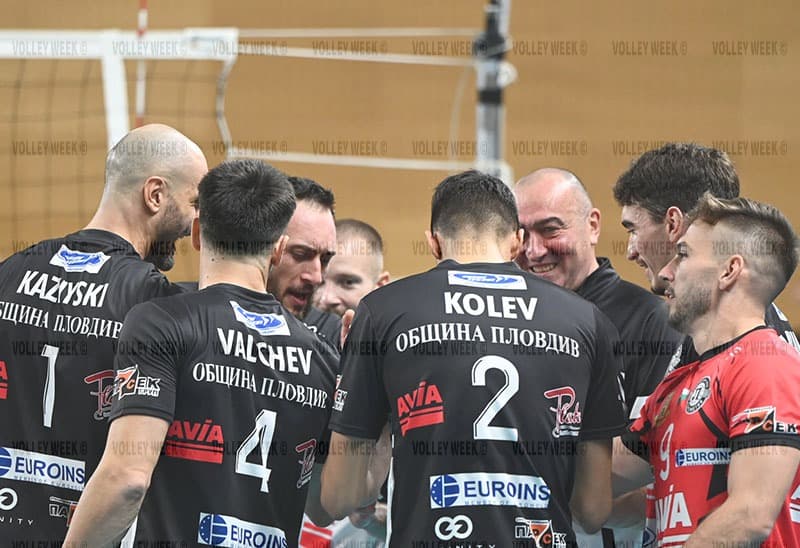
Interestingly, the coach rejects the popular theory that a star of such caliber can "pressurize" the others. According to him, Matey behaved as "an equal among equals", without pretense or distance, which boosted his teammates' self-confidence and unleashed their inner conviction. Yes, at the end of sets, it's normal for the balls to go to the best player – that's the logic of sports – but Lokomotiv sought balance: everyone to participate, everyone to be utilized, so that the game wouldn't become predictable and the team character would be preserved.
Naydenov also recounts how Kaziyski came to the team: the initiative came from president and sponsor Ivaylo Konstantinov, followed by direct talks between coach and player, built on long-standing trust. Kaziyski came with a clear understanding – if an offer he couldn't refuse appeared, the club wouldn't stop him, and his motivation to help Rado Stoychev was also a factor. Despite the short stay, the value for Lokomotiv is immense – not only sporting but also as a signal of the club's atmosphere.
"Volleyball Intelligence" and the Coach's "Inner Feeling"
One of the strongest lines in the conversation is the topic of talent. Naydenov doesn't reduce it to centimeters and muscles. His key phrase is"volleyball intelligence"– the ability to understand the game, to feel the decisions, to perceive and to repeat with desire until it works.
He gives an example with Todor Skrimov: upon his entry into the national team, he wasn't a "guaranteed star", but the coach's intuition suggested that he was the one who should start the Olympics. The risk was real, but the choice turned out to be pivotal – Skrimov played a strong tournament, and from there his career "took off" to another level.
The Olympic Paradox: The success that doesn't keep you at the helm
Naydenov speaks without bitterness, but clearly: after the Olympic Games, he didn't remain in charge because he was "inconvenient". He describes himself as a person who adheres to principles and doesn't allow interference in his work. He states that he inherited a "broken" team and did the most important thing – he turned it into a collective, which is why he took the team outside Bulgaria, to break away from the internal tension, conflicts, and noise.
A key detail is also his management model: he built a team where everyone has a role (analyst, assistants, etc.), because that's how you win in major sports. According to him, this was effective, but at the same time, it was used against him as an argument by people who didn't want such independence.
Player-Coach Transition: The most unpleasant feeling
One of the human aspects of the conversation is the admission of the most difficult part of the transition – seeing what needs to be done, being able to do it, but not being able to step in and play it in a match. Naydenov recounts how in his early years as a player-coach, he literally used to step in to show position and movement – sometimes even during a rally, while a serve was in progress. Today he does it less often, but the impulse remains: the coach "sees" the ball and the solution, and the powerlessness to execute it instead of the player is a specific pain.
Marek, politics and a new beginning: "They messed us up badly."
The case with Marek is presented as an example of destructive decisions "on another level," which have nothing to do with sporting logic. Naydenov claims that the attack against the club was political, not financial, and that it is absurd for the city's most successful sports symbol to be "erased."
The result, however, is the opposite of what was sought: a new project is created, which finds greater opportunities in Plovdiv and joins the Lokomotiv community with an audience, tradition, and perspective. This is precisely where the remark about the situation resonates:"Instead of gouging out our eyes, they just drew our eyebrows.".
Hebar and the big missed investment: the youth academy
Naydenov is particularly critical of the "strong first team without a foundation" model. On the topic of Hebar, his argument is categorical: years of serious funding have passed without enough focus on the youth academy. And when resources are depleted, emptiness remains – there are no 2-3 prepared boys who can maintain the level, there is no "backbone" of their own players.
According to him, this is precisely the strategic mistake of many Bulgarian clubs:if you have a big club, you must also have a big youth academy.Pazardzhik has children and tradition, but without a long-term system and patience, the result is inevitable – a collapse at the first financial tremor.
The details in training: why we are losing receivers
Naydenov returns to basic training and criticizes the modern "rushing": children want to attack immediately, clubs want quick results, while the foundation – overhead and underhand passing – remains undeveloped. He gives an example from his own beginnings: a year of only control exercises, which gave versatility – everyone could do everything. Today, specialization comes too early, and then we pay the price – especially for the receiver position.
Lokomotiv Avia and the youth academy in Plovdiv: the paradox of the big city
An interesting counterpoint: despite his successes and active personal campaign (visiting dozens of schools, meetings with directors, advertising), Naydenov admits that the club struggles to attract enough children in Plovdiv. For him, this is inexplicable against the backdrop of a "boom" in smaller towns, where clubs gather 200 children. His big goal is for Lokomotiv to leave behind a youth academy and local players – a legacy that will outlast every coaching cycle.
Final emphasis: "Bulgarian-ness" as a principle
In the lightning round and in his final words, Naydenov clearly states his philosophy: respect for Bulgarian coaches and priority for "our own." He does not name specific individuals for an "ideal team" so as not to offend others, but the principle is constant – trust in Bulgarian potential and work for a collective, not for an all-star gathering.
The conclusion from the conversation is simple and profound:the big result comes when there is a team, discipline, and a system. And without a youth academy – any strong squad is temporary.
photos: Nikolay Varadinov


