
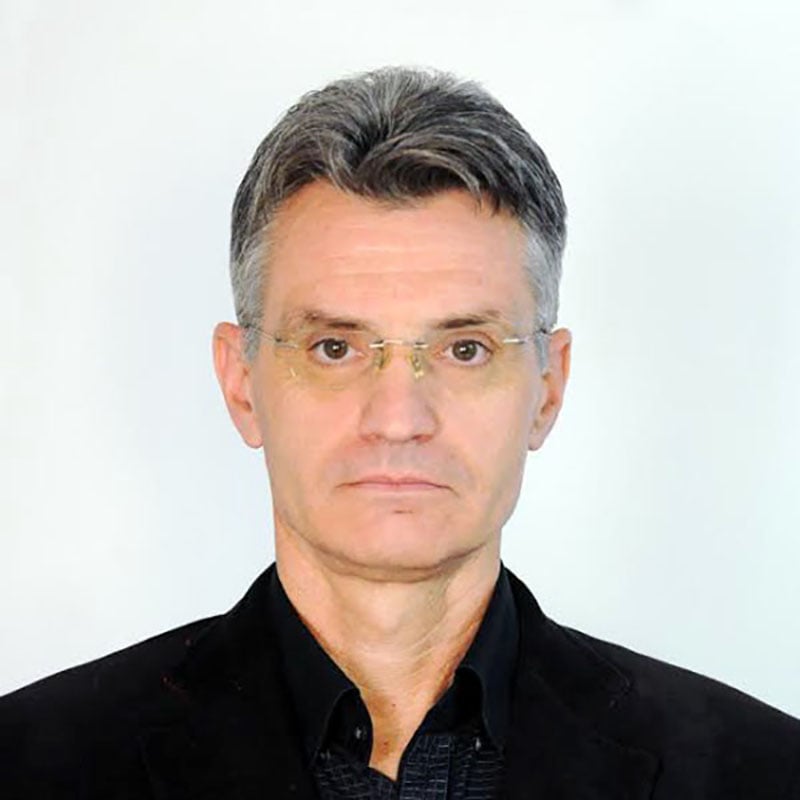


Two days after Bulgaria's painful elimination from EuroVolley 2026, we sought out Radostin Stoychev for his take on the national team's performance. The former coach of Bulgaria and current head coach of Turkish Halkbank followed the team's performances at the championship, and even before the tournament, he had pointed out several problems that, in his opinion, needed to be addressed – consistency, squad depth, reception, and service effectiveness.
After the 2:3 loss to Germany, which came after a 2:0 game lead, our conversation naturally began with the question of how this turnaround happened. Stoychev, however, did not seek the explanation in a single substitution, a single mistake, or a single bad game. For him, what happened should be viewed much more broadly – from work ethic and system of play to how a young and undeniably talented team learns to control difficult moments.
"A team is only as strong as its weakest player."
According to Stoychev, preventing a collapse like the one against Germany starts long before the match itself – with the work ethic and rules established at the very beginning of the training process.
"Things are set clearly and precisely, and all players are equal. A team is only as strong as its weakest player, not its strongest."
Next is building a system where standard situations are practiced, and everyone knows their responsibility. This is what should keep the team close in the score when the game is not going well or the opponent does something different than expected. Then, individual class can make the difference with a block, a difficult attack, or playing an almost impossible ball.
Stoychev noticed problems in this regard even against Portugal. Within a single game, he saw four situations where, after a setter's defense or an unconventional rally development, it was unclear who should set the second ball – the middle blocker, the libero, or the outside hitter.
"The system of play should limit interpretations and personal errors and keep you close in the score. You can lose, you're not guaranteed victory, but you give yourself a chance to be very close in points."
Attack is not the problem – Stoychev pointed to service and reception.
Even before EuroVolley, Stoychev identified reception and the effectiveness of the serve as among Bulgaria's main reserves. After the six matches of the championship, his assessment of the main reserves in Bulgaria's game has not changed.
"Bulgaria had an incredible attack in this championship. The problem was not in the attack, but in the two elements – serve and reception."
He points to the use of Zhasmin Velichkov as a libero as a very good solution.
"This guy did great on reception."
Regarding the serve, Stoychev highlights Alex Grozdanov. The reason is not only the pursuit of a direct point but also his low error percentage and his ability to trouble the opponent's reception. This makes it easier to predict the opponent's distribution and, consequently, to organize the block and defense.
Alex and Simeon Nikolov have a strong serve with which they can inflict direct damage, while for other players, Stoychev sees a need for more control. He points to the ratio between errors and positive serves for Denislav Bardarov and Iliya Petkov as a problem.
"You can't expect to lose 11 serves in one game, have three aces scored against you, make a mistake in attack, and expect to win the game." Here, he believes, one of the differences between a talented and a great team is also visible. "A great team knows how to control the game and has the patience to wait for the right moment. I don't like unjustified risk, because that's a good excuse."
Bardarov provided the missing balance.
Before the championship, Stoychev spoke about the need to find another outside hitter who could relieve some of the enormous burden on Alex Nikolov and balance both ends of the net. At EuroVolley, in his opinion, Bulgaria found such a player in Denislav Bardarov.
Up until the match with Germany, the young receiver had 51% attack efficiency – a metric Stoychev describes as exceptional for an outside hitter. His presence engaged the opponent's block from both ends of the net, which opened up more space through the middle and for back-row attacks.
Against Germany, this balance was disrupted after Bardarov's substitution. The burden once again fell on Alex Nikolov, and the Germans began to anticipate him earlier and organize their block better.
"In my opinion, Bardarov had a place in this match, even if he came out to rest a bit and then returned, so he could balance both ends of the net in attack." Why this didn't happen, Stoychev refuses to speculate.
"This is a coaching decision, for which I have no idea why it is so. I cannot comment on something when I am not on the team. I am only stating my personal opinion, based on the numbers and what I saw during the match."
He sets the same boundary on the question of why some players were hardly used in the championship. According to him, someone outside the team does not have the information the coach has – whether someone is injured, sick, in what condition they are, or how they are performing in the training process. "The coach knows best. He is there, he feels it. Sometimes he makes mistakes – that's normal."
"I didn't see how Germany could beat us"
Stoychev himself did not expect a comeback at 2:0.
"Watching the match, I didn't see how Germany could beat us." According to him, the Germans had a fake diagonal, with their second setter and no individual superiority over the Bulgarian players. But this very match shows why individual class is not enough on its own.
"Again, I have to go back to what I said at the beginning – the ethics of work. It is very important." Stoychev also recalls his position immediately after the World Championship – this generation should not be burdened with huge expectations too early. Not because there is no talent or future, but because the young national players are still gaining the experience needed to handle such situations.
"Not because being positive or euphoric is bad, but because there needs to be more realism in the assessments. Analyses and the line of conduct are the priority of the coach, staff, captain, or a more experienced player."
He describes the atmosphere around the national team in Bulgaria as "great, incredible, unique." According to him, such experiences should help the players to remain more composed and concentrated in crucial moments next time.
The victory over Poland should not be misleading
Stoychev puts the 3:2 success over Poland in the group stage in a slightly different perspective.
"It's very easy to play against Poland. Don't be fooled." His words do not mean it's easy to beat Poland. Stoychev is talking about the psychological aspect of such a match – a full hall, immense energy, one of the strongest teams in the world opposite, and a match that doesn't matter for the Poles' ranking. In such an environment, emotion alone lifts the team. The harder step, according to him, is different.
"It is more important and more difficult to play matches against Ukraine, against Israel, against Germany and to beat them, if not decisively, then in a relatively sure way."
When Bulgaria reaches this level of consistency, qualifying for the Olympic Games will be a completely realistic goal, and this squad will have the potential for even more there.
"Alex Grozdanov is among the top 6-7 middle blockers in the world"
One of the players who, according to Stoychev, already possesses the necessary experience and composure, is captain Alex Grozdanov. "Alex is one of the best middle blockers right now – certainly among the top 6-7 middle blockers in the world."
Stoychev worked with Grozdanov for two years and attributes his enormous growth primarily to the player's own hard work. He describes him as a complete middle blocker – in blocking, attack, and serving. According to him, playing in a club with Wilfredo Leon also helped the Bulgarian develop the way he sees the game and moves in blocking.
"Alex is certainly the most experienced and most composed in our team. And he carries a lot of weight. Even though it's not visible, he doesn't get as much glory as the Nikolov brothers, which is absolutely normal – he's a middle blocker."
"This team has a great future"
Despite the critical analysis, Stoychev has no doubt about the potential of this generation.
"This team has a great future. Incredible. The only thing is for these boys to stay grounded and step up their work rate."
"If a solution and a system for reception and serve play are found, we can calmly play and defeat the best."
According to him, the elimination by Germany could also prove useful if analyzed correctly. The next step for this young team is to better recognize moments in the match and to be more mature in decision-making.
From the national team to Halkbank
For Bardarov, work on these elements will continue precisely with Stoychev, as the two will reunite at Halkbank from the new season. The coach's assessment of his performance at EuroVolley is clear:
"His serve at this championship was weaker than his reception. The latter wasn't great, but he managed. His attack was at an incredible level, but there is still room for growth in blocking. We will certainly have a lot to work on during the season, and it depends on him how far he will go in his development."
Halkbank itself is also starting almost from scratch. The squad has changed significantly, and with such rotation, according to Stoychev, it's difficult to simply build upon what was done in the previous season. "A new setter, a new opposite, two new outside hitters. Everything is different."
The preparation time is also unrealistically short.
"We will have very little time and will enter the championship practically without cohesion. Ten days are not enough to recover the players, and even harder to build a game scheme. We are starting without preparation, which I have never liked."
Stoychev's goal is to build a system in the first months that will allow Halkbank to play as a team by January-February. The new opposites, according to him, are talented but still lack the routine and experience of Tsvetan Sokolov.
"Matey is not just there to help. Matey plays."
For Bardarov, the new season also brings the opportunity to work daily with Matey Kaziyski. "What Bardarov can learn from Matey is invaluable."
But Stoychev does not accept Kaziyski being seen solely as a future mentor for the young national player.
"Matey is not just there to help. Matey plays. Last year he was unequivocally the best player we had, without any doubt, with a big difference between him and the others."
And how much Bardarov will gain from this opportunity now depends on him. "It depends on Bardarov how much of the craft he will manage to steal from Matey."
The Bulgarian national player is expected to arrive in Ankara on Wednesday, but first, recovery awaits him. Stoychev revealed that Bardarov has been playing for the last eight days on anti-inflammatories due to a swollen knee. He has already had an MRI, and Halkbank is aware of his condition and will start with therapy and recovery.
Thus, the conversation returns to Radostin Stoychev's main thesis – talent is present, but the next step will not come with it alone. For the national team, it involves more consistency, a clear system, and control in difficult moments, and for Bardarov – through daily work at the club level. EuroVolley showed how high the ceiling of this generation is, but also how much work remains for strong individual matches to turn into a sustainable level against every opponent.
photo: volleyweek.bg


