


27 out of a total of 30 active CEV Referee Coaches gathered in Sofia during EuroVolley 2026. The European Refereeing Commission spoke about a common philosophy, development, responsibility, and most importantly, about referees who must be able to think and make decisions independently. All this sounds good, but one of the most important questions facing modern volleyball refereeing remained unanswered – what does the first referee do when technology tells him one thing, but his eyes and the TV replay show another?
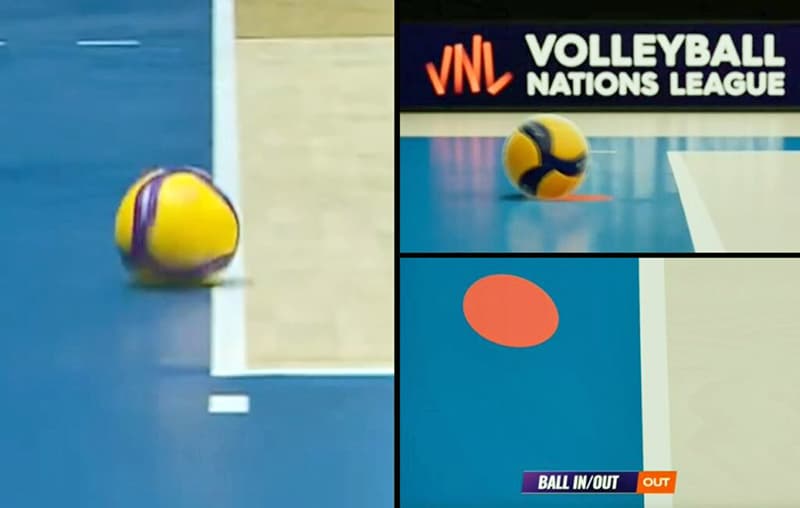
This is no longer a theoretical case. We saw a similar situation this season in the Volleyball Nations League match between France and Italy, where the first referee was Bulgarian Ivaylo Ivanov. The system gave a decision for the ball being in, but the TV replay showed something completely different. Protests followed, and Ivanov found himself at the center of a situation where the first referee's options to react against the technology's decision are severely limited.
And it is precisely here that the words of the President of the European Refereeing Commission, Arturo Di Giacomo, from the seminar in Sofia, take on another meaning: "The goal is to build independence, not dependence." Okay, but how independent can a referee be if he is not allowed to intervene in a situation where he sees a problem with the system's decision?
No one questions the necessity of technology in volleyball. Given the speed at which the game is played today, they are an indispensable assistant to referees. It is an entirely different question whether they should become an infallible last resort, especially when we are talking about computer-generated graphics that contradict the image from the actual video replay.
The France – Italy case also highlighted another problem. When the system makes a controversial decision, there is one person on the court to whom everyone turns – the first referee. The coach protests to him, the players demand an explanation from him, the crowd boos him, and at the same time, he may find himself without the real ability to change the decision for which everyone is holding him accountable.
That is why such a case would be interesting to discuss at a forum like the one in Sofia. Not whether Ivaylo Ivanov was right or wrong in the specific situation, but what a first referee should do when there are sufficient grounds to believe that technology has made a mistake.
CEV announced that it wants a common approach to refereeing in Europe, and Referee Coaches should train referees who can analyze situations and make independent decisions. This is the right direction, but it can hardly be separated from the increasing role that technologies are gaining in volleyball.
In Sofia, there was talk of "one vision, one philosophy, one goal." The next step should be a clear answer to what happens when man and machine disagree. Because technology should help the referee make the right decision, not turn him into a person who merely announces the system's decision.
photos:cev.eu and volleynews.it


