



The Ogbogu family has a new reason for pride in American volleyball. 16-year-old Maya Ogbogu became a world champion with the USA in the U17 girls' category, after the Americans defeated Turkey 3:0 (25:23, 25:11, 25:23) in the final in Santiago, Chile. The young outside hitter, whose father Bright Ogbogu is a cousin of the Tokyo 2020 Olympic champion Chiaka Ogbogu, was among the key figures for the new world champions.
Maya also left a significant mark on the final itself. She finished with 18 points and an impressive 78% attack efficiency, with only 15-year-old Kori Cooper scoring more for the USA – 23 points.
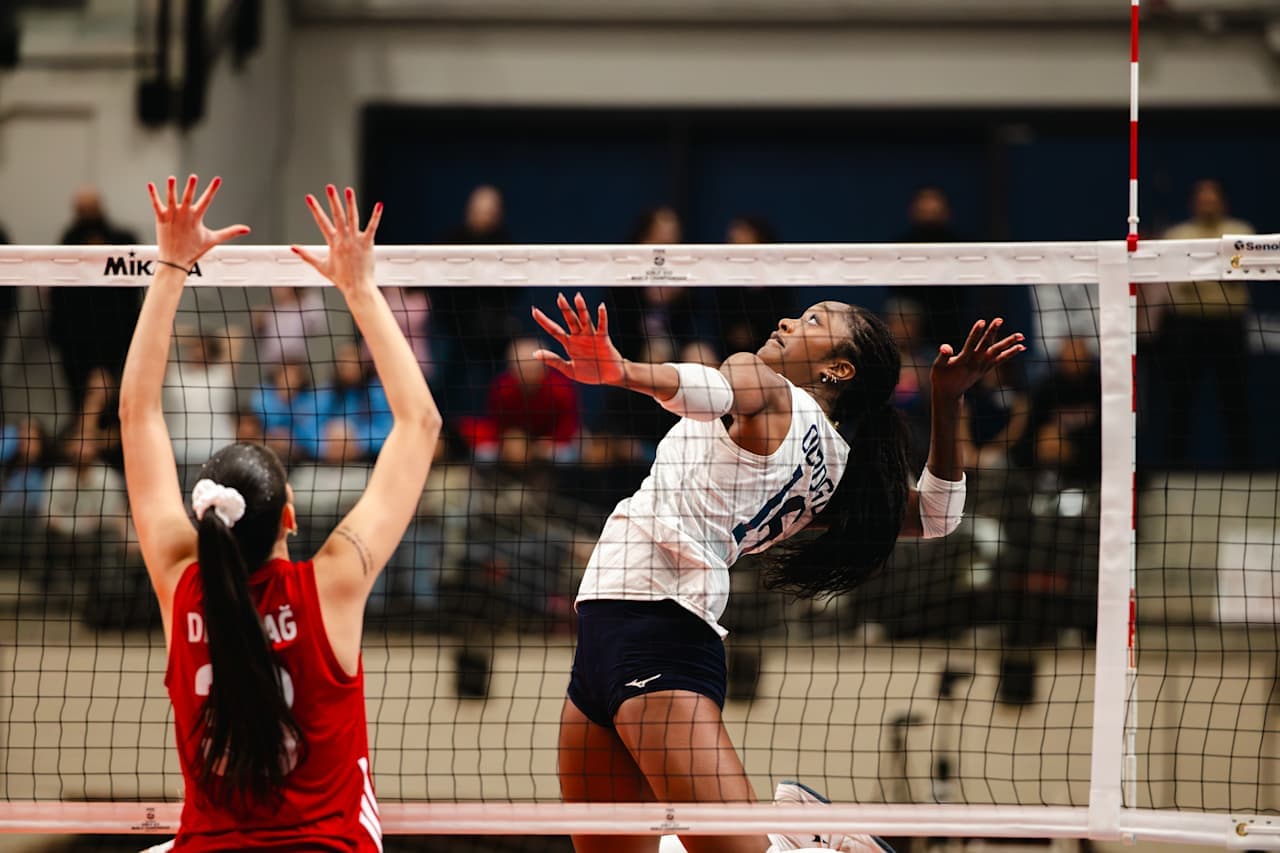
Thus, more than a decade after Chiaka Ogbogu began her journey to the top of world volleyball, the family now has another young athlete with a gold medal on the international stage.
The final at the National Stadium Park in the Chilean capital attracted over 2000 spectators. Turkey put up strong resistance in the first and third sets, but in key moments, the American team demonstrated greater efficiency. The USA finished the tournament with an impressive record of 9 wins in 9 matches, without losing a single set – 27:0.
The title is further proof of the potential of the American system for developing young female athletes, which has a strong foundation in school and college sports.
For Turkey, the silver medal is also a significant result and comes against the backdrop of the successes of the country's women's national team. The new generation shows that Turkish women's volleyball has the potential to maintain its position among the leading forces in the world.
USA dominates in attack
Interestingly, the Americans committed significantly more unforced errors – 21 compared to only 9 for Turkey. However, this was compensated by a huge superiority in the main elements.
| Statistic | USA | Turkey |
|---|---|---|
| Attack points | 45 | 24 |
| Aces | 9 | 4 |
| Block points | 12 | 8 |
| Unforced errors | 21 | 9 |
The difference in attack practically decided the final. The USA scored 21 more points from attack, and added an advantage of 5 aces and 4 blocks. Thus, the Americans managed to compensate for even the significantly higher number of their own errors.
Kori Cooper was the big figure in the final. At just 15 years old, the opposite hitter played an impressive final and finished as the top scorer in the match with 23 points. Four of them came directly from serves, and two – from blocks.
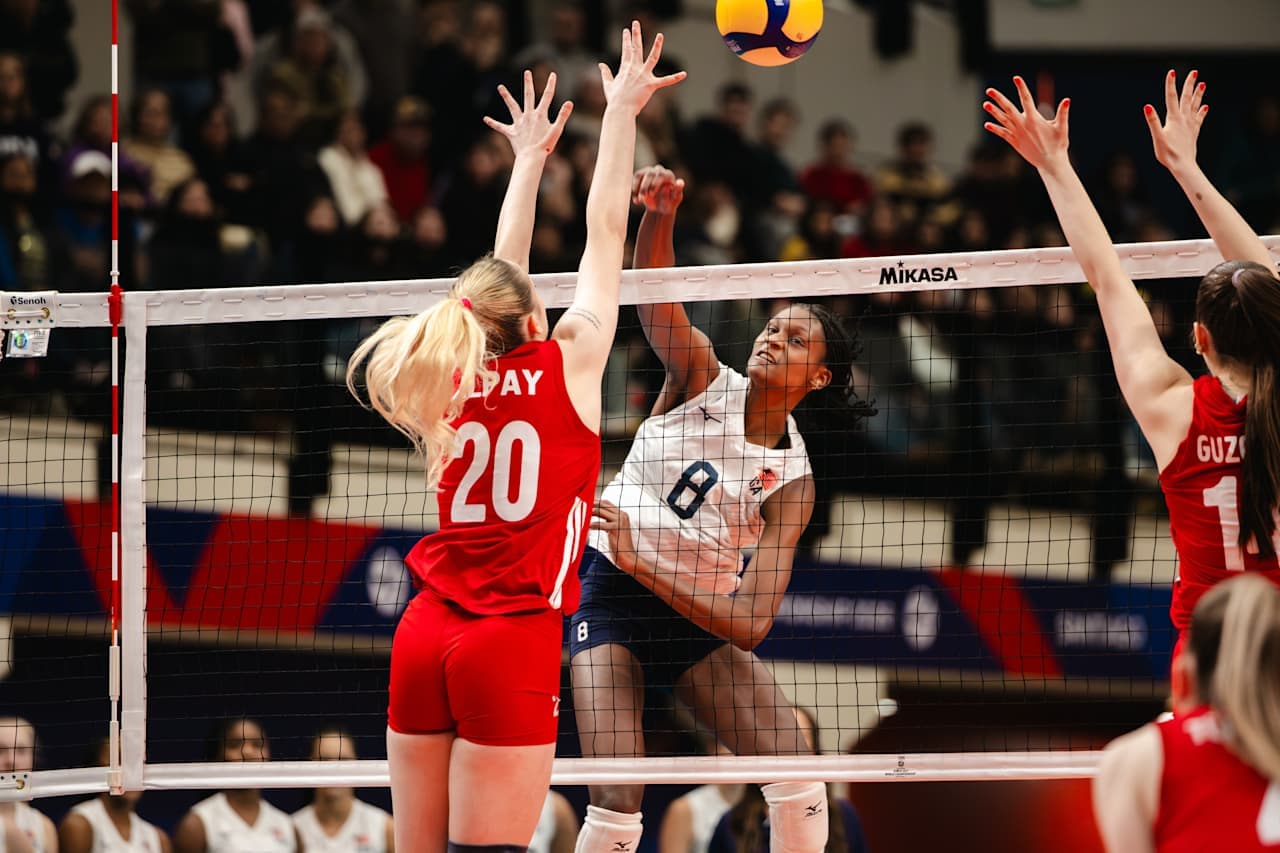
| Player | Team | Points in the final | Aces | Blocks |
|---|---|---|---|---|
| Kari Knots | USA | 23 | 4 | 2 |
| Maya Ogobogu | USA | 18 | 2 | 2 |
| Cagla Caglayandere | Turkey | 10 | 1 | 2 |
| Zeynep Doga Alpay | Turkey | 10 | 0 | 1 |
Knots and Ogobogu combined for a total of 41 points and were the main offensive weapon for the USA in the final. The Americans had two players with higher scoring than Turkey's top scorers, which clearly shows the difference in offensive power between the two teams.
China fought for the bronze
In the bronze medal match, China made a comeback against Chinese Taipei and won 3:1 (26:28, 25:15, 25:19, 25:22). Both Asian teams reached the Top 4 in the first edition of the U17 World Championship in 2024. However, China failed to defend its world title and this time had to settle for the bronze medals. Chinese Taipei repeated its ranking from 2024 and once again remained in fourth position. One of the main factors for China's success in the bronze medal match was the serve. The Chinese recorded a total of 13 aces and complemented the pressure with strong blocking.
Italy finished fifth
Italy won the battle for fifth place after defeating the Republic of Korea 3:1 (25:20, 24:26, 25:20, 25:14). Thus, the Italians finished the tournament in fifth position, while the Koreans remained sixth. Thailand took seventh place after a decisive victory over Croatia with 3:0 (25:21, 25:10, 26:24).
Final Standings of the U17 World Championship
| Place | Team |
|---|---|
| 1 | USA |
| 2 | Turkey |
| 3 | China |
| 4 | Chinese Taipei |
| 5 | Italy |
| 6 | Republic of Korea |
| 7 | Thailand |
| 8 | Croatia |
| 9 | Poland |
| 10 | Dominican Republic |
| 11 | Japan |
| 12 | Argentina |
| 13 | Peru |
| 14 | Venezuela |
| 15 | Philippines |
| 16 | Czech Republic |
| 17 | Brazil |
| 18 | Spain |
| 19 | Mexico |
| 20 | Tunisia |
| 21 | Puerto Rico |
| 22 | Chile |
| 23 | Egypt |
| 24 | Algeria |
The podium with representatives from North America, Europe, and Asia shows the wide geographical distribution of power in this generation. The USA finished as world champion ahead of Turkey and China, while Chinese Taipei once again remained just off the podium.
photos:volleyballworld.com


