
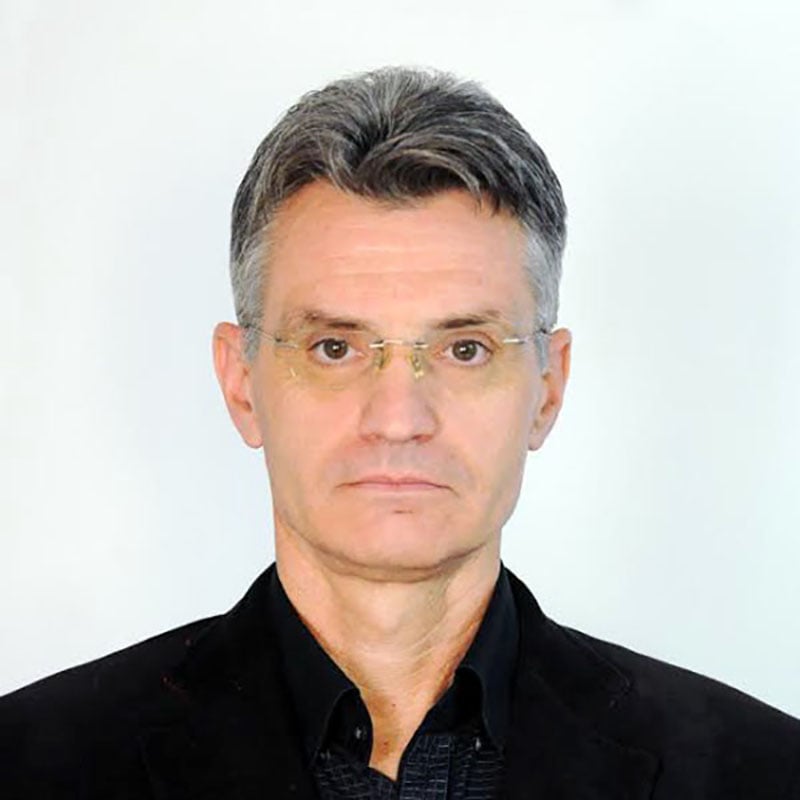


Along with Nikola Grbic's latest great success, I delved into my archive and realized how many times our paths have crossed over the past 16 years. I can't say that I know him closely enough to tell what he's like outside the hall or what's going on in his head at certain moments. However, I can tell what I've seen through my lens. And there are enough shots there to make an interesting portrait.
In 2010, I photographed Grbic when he became Italian champion with Cuneo. Vlado Nikolov was also on the same team. Nikola was 36 years old, but he continued to be one of the great setters in world volleyball. The man through whose hands the game passed and who had to manage characters and top-class players on the court.
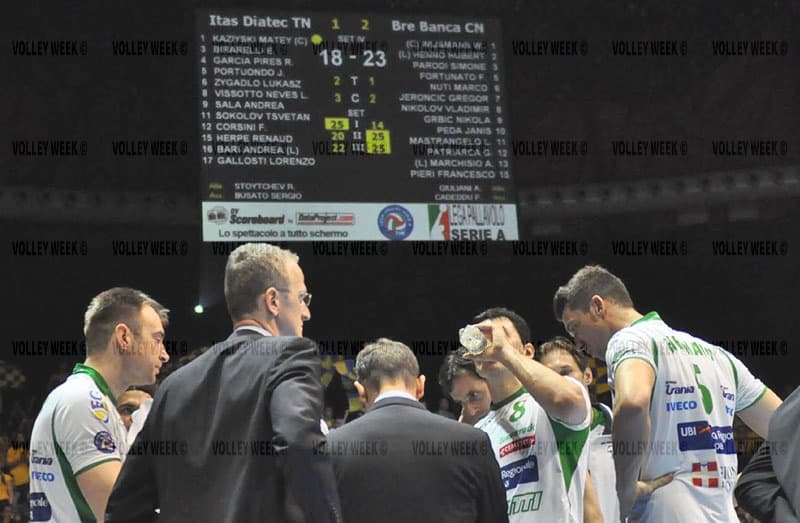
Perhaps that's why the explanation that it's easy for Grbic to win with Poland because he has Leon, Fornal, Semeniuk, and a bunch of other stars has always seemed too simple to me. Of course, it's better to have such players. But someone has to tell them who will play, who will stay on the bench, and who will come in for just a few points. And then all of them must continue to accept his decisions and be ready when their moment comes.
In fact, Grbic hasn't changed his profession that much. As a player, he distributed the balls; now he distributes the roles.
I also have other photos from the same year, 2010. They are from Belgrade, from one of Grbic's last tournaments with the national team. There, Serbia played against Cuba, and today this match looks much more interesting than it seemed to us then. On one side is 37-year-old Nikola Grbic, approaching the end of his great career. On the other is a 17-year-old Cuban boy who is already making the volleyball world talk about him – Wilfredo Leon.
Then the two were rivals. A little later that same year, Cuba and Serbia would meet again at the World Championship in Italy. In the semi-final, the Cubans would stop Grbic and Serbia with 3:2 (22:25, 25:17, 31:29, 22:25, 16:14) and deprive them of the opportunity to play for the world title.
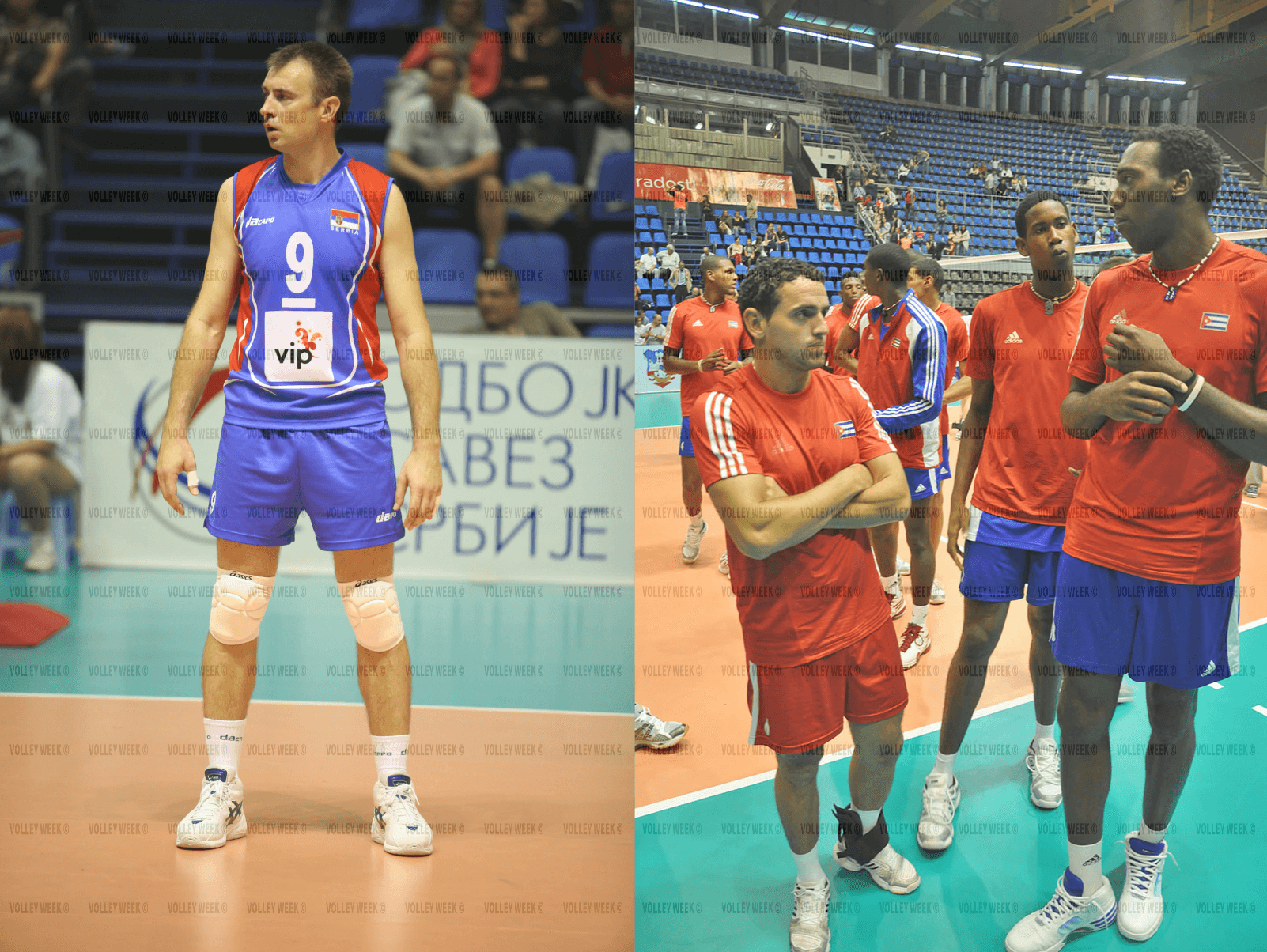
Sixteen years later, Leon is on the court again, and Grbic is next to him again. Only now they are no longer rivals. Leon is one of Poland's stars, and the man he played against as a teenager is his coach.
But Belgrade 2010 hides another story that no one could have predicted then.
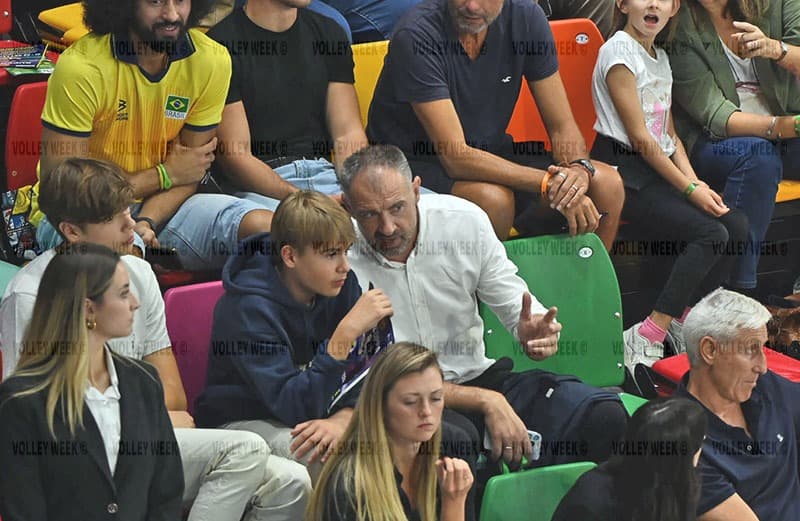
Vlado Nikolov is at the tournament with his two sons. Alex and Moni are still children and are watching the great volleyball players in front of them, among whom are Grbic and Leon.
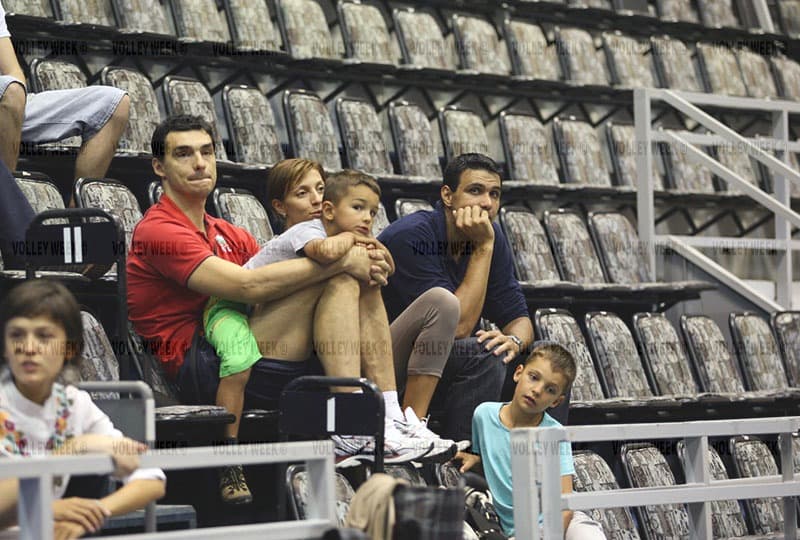
Hardly anyone in the hall then imagined what this picture would look like 15 years later. Moni would become a setter, Alex – an outside hitter and scorer. Grbic would be the coach of Poland, and Leon would play under his leadership. And the little boys who watched them from the sidelines in 2010 would one day stand against them.
Sometimes life (volleyball) really plays incredible jokes.
My next meeting with Grbic, which has a direct connection with Bulgaria, is in Krakow in 2017. This time he is no longer on the court. He is the coach of Serbia, and against him is Bulgaria in the quarter-finals of the European Championship. The Serbs defeated us 3:0 (25:21, 25:22, 28:26) and ended our participation in EuroVolley.
The man I photographed seven years earlier as one of the symbols of the Serbian national team was now standing by the sideline and blocking Bulgaria's path to the European semi-final. Back then, we didn't know that the next big chapter in his coaching career would not be written with Serbia, but with Poland.
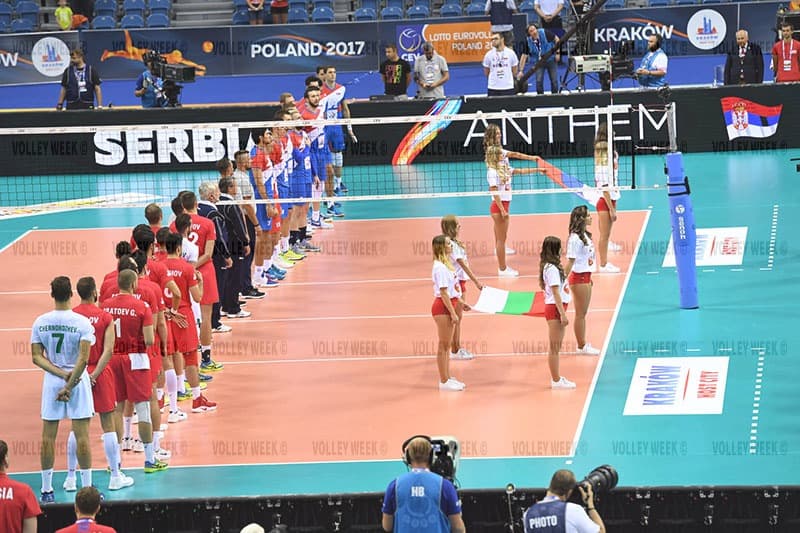
Eight years later, I am in Poland again and photographing Grbic again. Only now he is at the helm of the hosts.
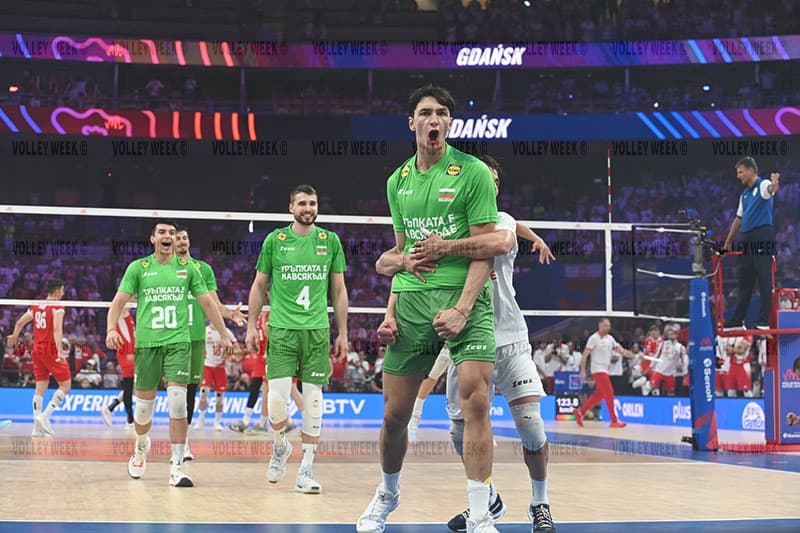
Gdansk, 2025. Bulgaria against Poland in the VNL. Grbic is on the Polish bench, Leon is on his side of the net, and against them are now Alex and Moni Nikolov. The same two boys who were with their father in Belgrade in 2010 and watched Grbic and Leon.
Bulgaria wins 3:2 (17:25, 25:22, 25:23, 27:29, 15:11). Aleksandar Nikolov finishes with 24 points, and the last point comes after an ace by Simeon Nikolov. This is our first victory over Poland since that same 2017 after ten consecutive defeats.
I also have photos from that match. When you place them next to the shots from Belgrade in 2010, the time between them seems to disappear. The two boys who once watched their idols are now on the court against them.
A few months after Gdansk, I photographed Grbic again. This time in the Philippines.
Poland had come to the World Championship for the title. Leon, Fornal, and Semeniuk were in the squad again, and Bartosz Kurek was also there. However, Italy stopped the Poles in the semi-final. They won the bronze medals, and Bulgaria reached the final.
From that day, I have a photo of Nikola Grbic with the bronze medal around his neck. I was there, I watched him and photographed him. And he didn't look at all like a man who had received what he came for.
I cannot know what he was thinking. No one but him can. But Poland's goal was the final and the world title, not third place. For a person who has set the bar so high his entire life, a bronze medal can hardly erase the feeling of a missed opportunity.
.png&w=1920&q=75)
This is also important for understanding his current success. In Poland, it has long not been enough to simply win a medal. This team and Grbić are expected to win tournaments. He himself joked during EuroVolley about the expectations for the Poles – always gold, and if possible, every set to be 25:15. “For us, this is just an ordinary Tuesday,” Grbić said with a sense of humor, making everyone laugh at the press conference before the semifinals in Milan.
A year after the Philippines, the story from Gdańsk repeated itself. This time in Sofia.
Bulgaria defeated Poland 3:2 (20:25, 31:29, 25:23, 19:25, 20:18), and Aleksandar Nikolov scored 36 points. It later turned out that this was the only defeat for the Poles in the entire EuroVolley 2026.
For the second time in just over a year, Bulgaria showed that Grbić's team can be defeated. However, this time we couldn't use the victory as we did a year earlier. After the success in Gdańsk, the young Bulgarian team continued to grow and a few months later made its splash at the World Championship in Pasay City. After the victory in Sofia, our path at EuroVolley ended earlier.
.png&w=1920&q=75)
Poland continued. And reached the European title.
The final itself also showed why the explanation “it's easy for him with such players” is too superficial. Kamil Semeniuk did not start as a starter. We are talking about a volleyball player who, in a huge number of national teams in the world, would be among the first names in the squad. Grbić left him on the bench, and when his moment came, he put him in.
Semeniuk finished with 10 points, scoring 9 out of 11 attacks – 82 percent efficiency, added an ace, and made six receptions without an error. After the final, Grbić hugged him, and then spoke about him with great respect and even stated that, in his opinion, he deserved an individual award.
This is precisely one of the most difficult tasks with such a squad. Not just to choose six, but to make the others ready the second you need them. To convince one of the best volleyball players in the world that today he can start on the bench, without making him less important to the team.
Once, Grbić had to feel who to give the next ball to. Today, he has to feel who to give the next opportunity to.
In my archive, there is also a completely different photo of Nikola – with his two sons, Matija and Miloš. When I took it, it was just a nice family shot. Today, it carries a different story.
Matija is in the USA, where he studies and plays volleyball for Penn State. The younger Miloš has already reached the national teams of Serbia. Thus, one of the most famous volleyball families continues its history.
Nikola's father – Miloš Grbić, was a Yugoslav national player. Nikola and his brother Vladimir became Olympic champions together in Sydney in 2000. After them came Matija and Miloš. Three generations of one family, connected by the same net.
And it is precisely here that the portrait of Nikola Grbić becomes much more complex than the number of medals won.
He is one of the great symbols of Serbian volleyball. An Olympic champion with his country, and later the coach of Serbia. And yet, his greatest successes as a national coach come with Poland.
There's no way to know if, deep down, there isn't a disappointment that these victories don't come with the Serbian emblem on his chest. It would be unfair to claim such a thing on his behalf. The paradox itself, however, is interesting enough. One of the greatest players Serbian volleyball has given to the world builds his great coaching history with another country. And somehow, one inevitably thinks of the old saying that no one is a prophet in their own country.
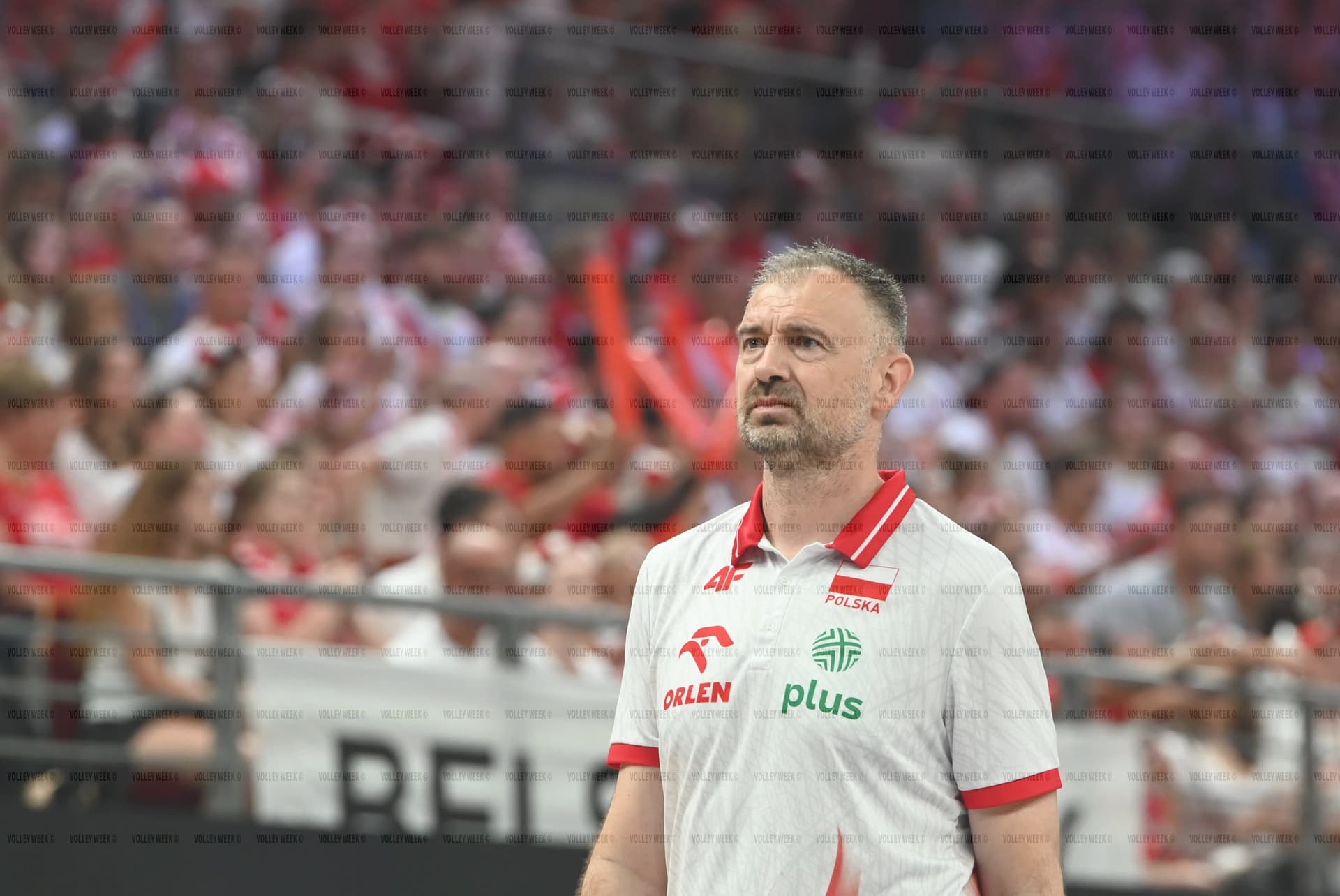
There remains another huge goal.
Nikola Grbić already knows what it's like to be an Olympic champion as a volleyball player. In Sydney in 2000, he reached the top with Yugoslavia. As a coach, he led Poland to the Olympic final in Paris in 2024, but there he only got silver.
Next is Los Angeles 2028.
Grbić will have another chance to achieve something Karch Kiraly has already done – to be an Olympic champion both as a player and as a head coach. In Paris, he was one victory away. The next attempt will be in Los Angeles.
When I look back at the photos now, everything somehow fits together. Cuneo in 2010 – Grbić and Vlado Nikolov are teammates and become champions. Belgrade in the same year – Grbić plays against 17-year-old Leon, while little Alex and Moni watch from the sidelines. Krakow in 2017 – his Serbia eliminates Bulgaria. Gdansk in 2025 – the now grown-up Nikolov brothers defeat Grbić and Leon's Poland. Then came Pasay City, Poland's bronze, and the Bulgarian final. After that, Sofia and another 3:2 for Bulgaria. And finally, Milan and Poland's European title.
Sixteen years is a long time. Roles have changed, children have grown up, rivals have become allies, and teammates – fathers to the next generation of volleyball players.
I don't know Nikola Grbić closely enough to tell what he thinks or what he's like outside the volleyball hall. I can only tell what I've seen over the years from the other side of the lens.
And from there, one thing seems unchanged. Grbić continues to set. Before, it was the balls; today, it's people, roles, trust, and huge expectations.
And after the European gold, he can now look towards the next big goal. Because with Nikola Grbić, the impression throughout all these years is one – what has been achieved very quickly becomes the past, and the most important tournament is always the next one. And so on to the Top!
photos: Nikolay Varadinov


